A medieval browser game where the laws are actually enforced
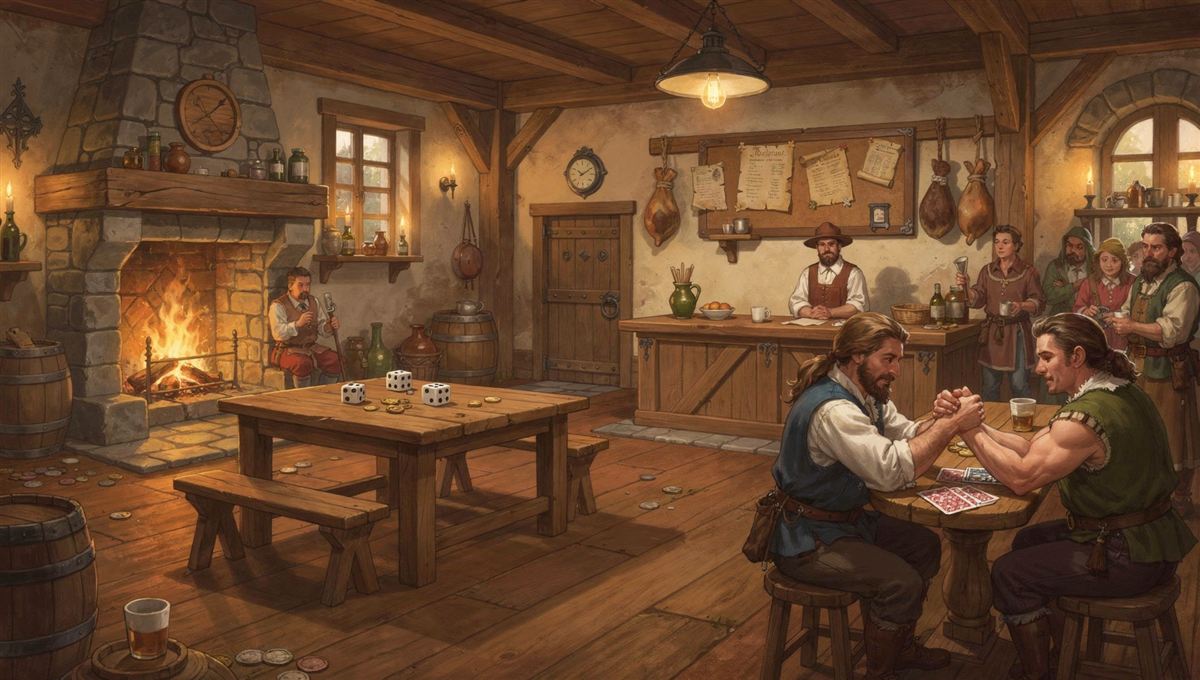
Medieval Guilds is a free medieval browser game set in Europe in the year 1330. It runs in the browser, phones included, with nothing to download. You arrive in one of 51 hand-painted towns across seven kingdoms, pick a trade, and from there you can become anything: master smith, consul of a guild, mayor, parish priest, banker, head of a faction.
It is a slow, social game in the family of Travian, Ikariam and Renaissance Kingdoms, with one difference that changes everything: politics is not theatre. When the elected mayor passes a tax, a price cap or a tariff, the game engine applies it to every single trade. That is why elections matter, and why any inhabitant can run for office and unseat a bad ruler.
What you will find
- A living world640 AI-driven inhabitants work, buy, vote, declare feuds and comment on the weather in the square. The world keeps going while you are offline.
- A market with real demandPrices rise and fall with who buys and who sells. Some rare goods (silver, tin, cinnabar, woad, amber, furs) are produced in a single town: you travel or you import.
- Elections and enforced lawsMayor and parish priest are elected by players. Taxes, price caps, tariffs and fines are applied by the engine, not roleplayed.
- Trades, workshops and guildsFarming, herding, mining, smithing, armoury, tailoring, baking, trade. Guilds have consuls and missions.
- Factions, feuds and warsFound a faction with your own crest, declare feuds, defend your town in war with weapons and armour that really change attack, defence and agility.
- Never pay-to-winReal money buys only convenience and shorter waits. Stats, offices and victories are not for sale: it is written in the Terms of Service.
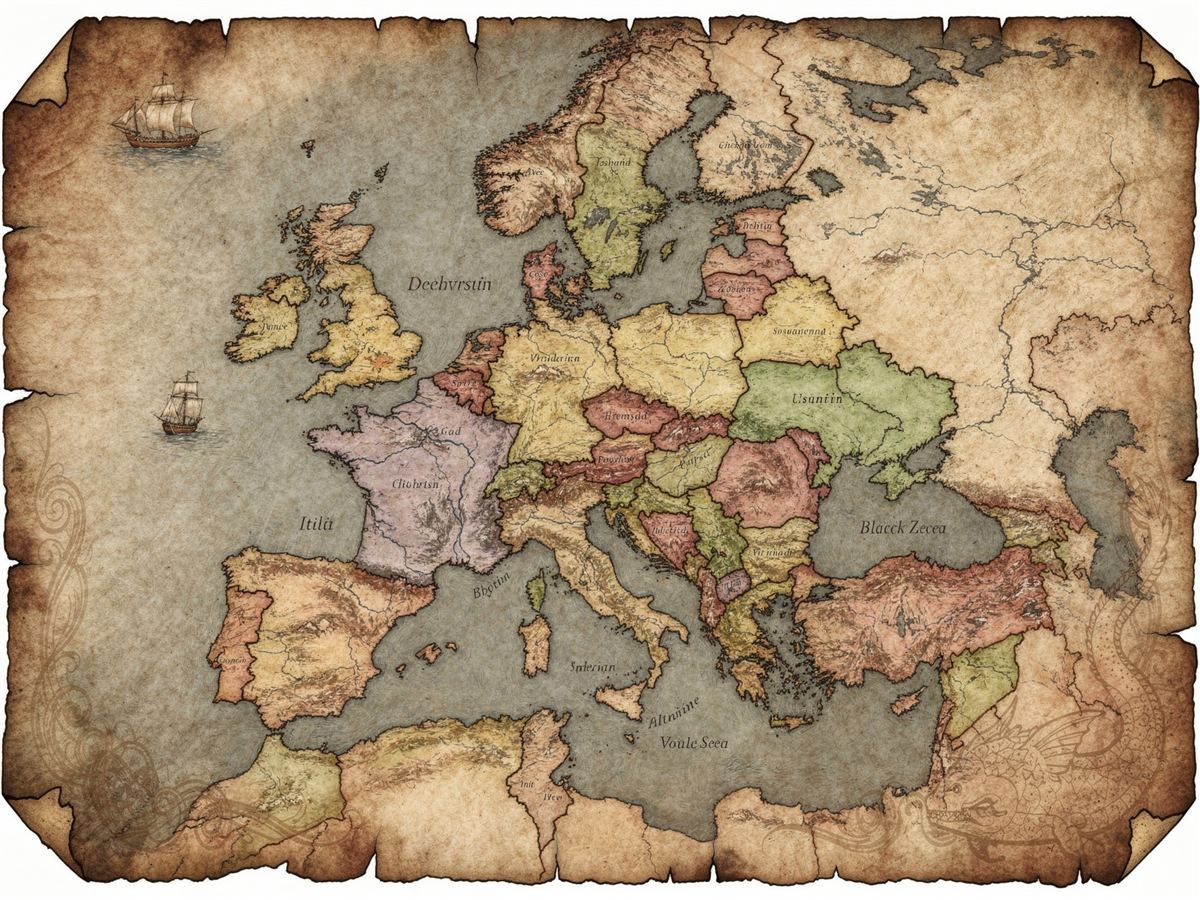
Seven kingdoms, 51 towns
At sign-up you choose your homeland. Each kingdom has its own language, its own names and a rare good the other kingdoms cannot produce.
| Italia | Firenze, Siena, Pisa, Genova, Roma, Napoli, Palermo, Bologna, Milano e i borghi toscani |
|---|---|
| Sacro Romano Impero | Norimberga, Colonia, Rothenburg, Bamberga, Goslar |
| Inghilterra | Londra, York, Canterbury, Norwich, Cornovaglia |
| Castiglia | Toledo, Siviglia, Segovia, Cuenca, Almadén |
| Francia | Parigi, Lione, Reims, Digione, Troyes |
| Polonia | Cracovia, Poznań, Wieliczka, Sandomierz, Toruń |
| Rus' | Novgorod, Pskov, Ladoga, Staraja Russa, Toržok |
How it plays, in short
- Sign up with an email and create your character: name, gender, trade and home town.
- Work: every action takes real minutes or hours and finishes on its own. Collect when you return.
- Sell at the market, buy tools, join a guild, build a house and a workshop.
- Vote, run for office, found a faction, travel for rare goods and write letters to other inhabitants.
Frequently asked questions
Does the game continue while I'm offline?
Yes. Started actions finish on their own and you collect on return; the world (market, elections, inhabitants) keeps living. Careful: hunger and thirst also fall while you're away — always keep bread and water in your pack and start a long job before leaving.
Can I die?
Yes, of hardship — but only through long neglect. If hunger or thirst stay at zero, health falls (from full to zero takes ~16 days of total abandonment). At zero health you die and are reborn as your HEIR: you keep house, properties, bank, guild, skills and faith, but lose half your cash (funeral costs to the treasury), half of every pack stack and all tools. Below 30 health the interface warns you. Care is simple: bread, water, sleep and the herbalist's medicine. On death you also lose HALF your skill levels, your guild membership and your faith (get re-baptized in church). And there is RUIN: if after death you remain in total abandonment for another 15 days (no meal, sip or job), you lose practically everything — house, properties, bank, coins, pack, skills back to level 1. A single act of care stops the clock.
Can I take a holiday (a safe break from the game)?
Yes: from the character sheet, up to 14 days, ONCE per calendar year. On holiday your body is frozen — no hunger, thirst, health loss, death or ruin — but you can't work, travel or sell. You may return early anytime (the year's holiday is still spent). For short absences bread and water in the pack are enough: you only die after ~16 days of total neglect.
How do I earn my first coins?
Three quick paths: 1) draw water at the well and sell it (it always sells); 2) work the field and sell grain; 3) check the Tavern board: civic orders pay from the treasury whoever delivers first. With 20–30 coins you buy your first tool and yields rise.
Why can't I start an action?
Six possible causes: 1) the structure doesn't exist here; 2) another action is running (one at a time); 3) you're travelling; 4) not enough energy (⚡ on the button); 5) missing ingredients (the oven wants 1 flour + 1 water); 6) missing tool (axe for forest, pickaxe for mine) — bare hands often work but yield less.
How long do actions take and where do I see the time?
Every button shows ⏱ time and ⚡ energy BEFORE starting: from 13 minutes for water to ~2 hours for the field. Your real time can be shorter: skill (−2%/level, −25% max), public works, guild (−5%), mass blessing (−5%/−8%), private shop (−20%). The top bar shows the countdown.
Does food expire?
Yes: fresh bread fills fully for 1 day, then it's stale (half effect) and after 3 days it must be thrown away (the Pack shows it by colour). Water doesn't expire. Buy little and often, or keep stocks in storage where decay slows.
Pack, Warehouse, home storage, shop storage: what's the difference?
The PACK travels with you but weighs (capacity = strength + trade + gear). The communal WAREHOUSE is free but goods stay in that village. HOME STORAGE (100–5000 kg by house) is yours, in your house's city. SHOP STORAGE (200–1500 kg) sits in your private workshop: handy for raw materials and products.